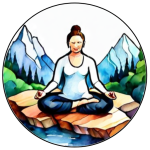

Unlock Inner Peace: Your Guide to Mindful Breathing Exercises
Imagine a world where you can quiet the chaos in your mind, find stillness in the midst of a storm, and cultivate a deep sense of inner peace. This isn't a fantasy; it's the promise of mindful breathing exercises. In a world that constantly demands our attention, learning to breathe consciously can be a revolutionary act, a simple yet powerful tool to reclaim your calm and center yourself in the present moment.
What is Mindful Breathing?
Mindful breathing is more than just inhaling and exhaling; it's about paying attention to your breath without judgment, observing the sensations as they arise and pass away. It's a way to anchor yourself in the present moment, breaking free from the endless loop of thoughts that often dominate our minds. It’s a core component of mindfulness meditation, a practice rooted in ancient traditions.
Unlike regular breathing, which is often automatic and unconscious, mindful breathing requires deliberate attention. You focus on the physical sensations of your breath – the rise and fall of your chest or abdomen, the cool air entering your nostrils, the warm air leaving your mouth. When your mind wanders, as it inevitably will, you gently guide your attention back to your breath. This simple act of returning is the heart of the practice.
The Science Behind Mindful Breathing
The benefits of mindful breathing extend beyond a feeling of calm. Studies have shown that it can:
- Reduce stress and anxiety by activating the parasympathetic nervous system, which is responsible for the rest and digest response.
- Lower blood pressure and heart rate.
- Improve sleep quality.
- Increase focus and concentration. [externalLink insert]
- Enhance emotional regulation.
By consciously controlling your breath, you can influence your body's physiological state and, in turn, your mental and emotional well-being.
Getting Started with Mindful Breathing Exercises
The beauty of mindful breathing is its simplicity. You can do it anytime, anywhere, without any special equipment. Here's a step-by-step guide to get you started:
- Find a comfortable position: You can sit, lie down, or even stand. The key is to be relaxed and supported. If you're sitting, make sure your spine is straight but not stiff.
- Close your eyes (optional): Closing your eyes can help minimize distractions, but if it feels uncomfortable, you can simply soften your gaze or focus on a point in front of you.
- Become aware of your breath: Notice the natural rhythm of your breath without trying to change it. Observe the sensations in your body as you inhale and exhale.
- Focus on the sensations: Pay attention to the rise and fall of your chest or abdomen, the air entering and leaving your nostrils, or any other sensation that stands out to you.
- Acknowledge and redirect: As your mind wanders (and it will), gently acknowledge the thoughts or feelings without judgment and redirect your attention back to your breath.
- Continue for a few minutes: Start with 5-10 minutes and gradually increase the duration as you become more comfortable.
Popular Mindful Breathing Techniques
While the basic principle remains the same, there are various mindful breathing techniques you can explore to find what works best for you. Here are a few popular options:
Diaphragmatic Breathing (Belly Breathing)
Diaphragmatic breathing, also known as belly breathing, encourages you to use your diaphragm, the primary muscle involved in breathing. This technique can help you take fuller, deeper breaths, which can be particularly helpful for reducing anxiety.
- Place one hand on your chest and the other on your abdomen.
- Inhale slowly through your nose, allowing your abdomen to rise while keeping your chest relatively still.
- Exhale slowly through your mouth, allowing your abdomen to fall.
- Repeat for several minutes, focusing on the movement of your abdomen.
4-7-8 Breathing
The 4-7-8 breathing technique is a powerful tool for promoting relaxation and reducing stress. It involves a specific pattern of inhaling, holding, and exhaling that can help calm the nervous system.
- Exhale completely through your mouth, making a whooshing sound.
- Close your mouth and inhale quietly through your nose for a count of 4.
- Hold your breath for a count of 7.
- Exhale completely through your mouth, making a whooshing sound, for a count of 8.
- Repeat this cycle at least four times.
Alternate Nostril Breathing (Nadi Shodhana)
Alternate nostril breathing, or Nadi Shodhana, is a yoga technique that is believed to balance the left and right hemispheres of the brain, promoting a sense of calm and clarity.
- Sit comfortably and close your right nostril with your right thumb.
- Inhale deeply through your left nostril.
- Close your left nostril with your ring finger and release your right nostril.
- Exhale through your right nostril.
- Inhale through your right nostril.
- Close your right nostril and release your left nostril.
- Exhale through your left nostril.
- Continue alternating nostrils for several minutes.

Box Breathing
Box breathing, also known as square breathing, is a simple yet effective technique used by Navy SEALs to manage stress and improve focus. It involves visualizing a box and coordinating your breath with each side.
- Exhale completely, emptying your lungs.
- Inhale slowly through your nose for a count of 4.
- Hold your breath for a count of 4.
- Exhale slowly through your mouth for a count of 4.
- Hold your breath for a count of 4.
- Repeat this cycle several times, visualizing a box as you breathe.
Incorporating Mindful Breathing into Your Daily Life
Mindful breathing isn't just something you do during formal meditation sessions; it's a practice you can integrate into your daily life to manage stress and cultivate a sense of presence. Here are a few ideas:
- During your commute: Instead of getting caught up in traffic, focus on your breath and use the time to center yourself.
- Before a stressful meeting: Take a few minutes to practice diaphragmatic breathing to calm your nerves and improve your focus.
- When you feel overwhelmed: Use the 4-7-8 breathing technique to quickly reduce anxiety and regain control.
- Before bed: Practice mindful breathing to relax your body and mind, preparing you for a restful night's sleep.
Common Challenges and How to Overcome Them
Like any new practice, mindful breathing can come with its challenges. Here are a few common obstacles and tips for overcoming them:
- Mind wandering: It's natural for your mind to wander, especially when you're first starting. Don't get discouraged. Simply acknowledge the thoughts without judgment and gently redirect your attention back to your breath.
- Restlessness: If you find it difficult to sit still, try practicing mindful breathing while walking or doing a simple activity like washing dishes.
- Impatience: Mindful breathing is a skill that takes time and practice to develop. Be patient with yourself and celebrate your progress, no matter how small.
- Doubt: It's easy to doubt the effectiveness of mindful breathing, especially if you don't feel immediate results. Trust the process and keep practicing. The benefits will accumulate over time.
The Transformative Power of Breath
Mindful breathing exercises offer a simple yet profound way to cultivate inner peace, reduce stress, and enhance your overall well-being. By learning to pay attention to your breath, you can anchor yourself in the present moment, break free from the tyranny of your thoughts, and discover a deep sense of calm and clarity. So, take a deep breath, and embark on this transformative journey. Your mind, body, and spirit will thank you for it.